Lead generation for go-kart tracks can significantly improve when campaigns are informed by behavioral triggers rather than generic audience assumptions. By tracking how visitors browse, click, and interact with key pages, operators can identify high-intent behaviors that signal genuine interest in bookings, parties, and group events.
Actions such as viewing pricing pages, starting a booking form, or returning multiple times within a short period can trigger tailored follow-up messages. When these behavioral signals are connected to targeted offers, automated email sequences, and remarketing campaigns, go-kart tracks can nurture warmer leads more efficiently and convert more inquiries into confirmed reservations.
Mapping High-Intent Conversion Funnels For Go-Kart Venues
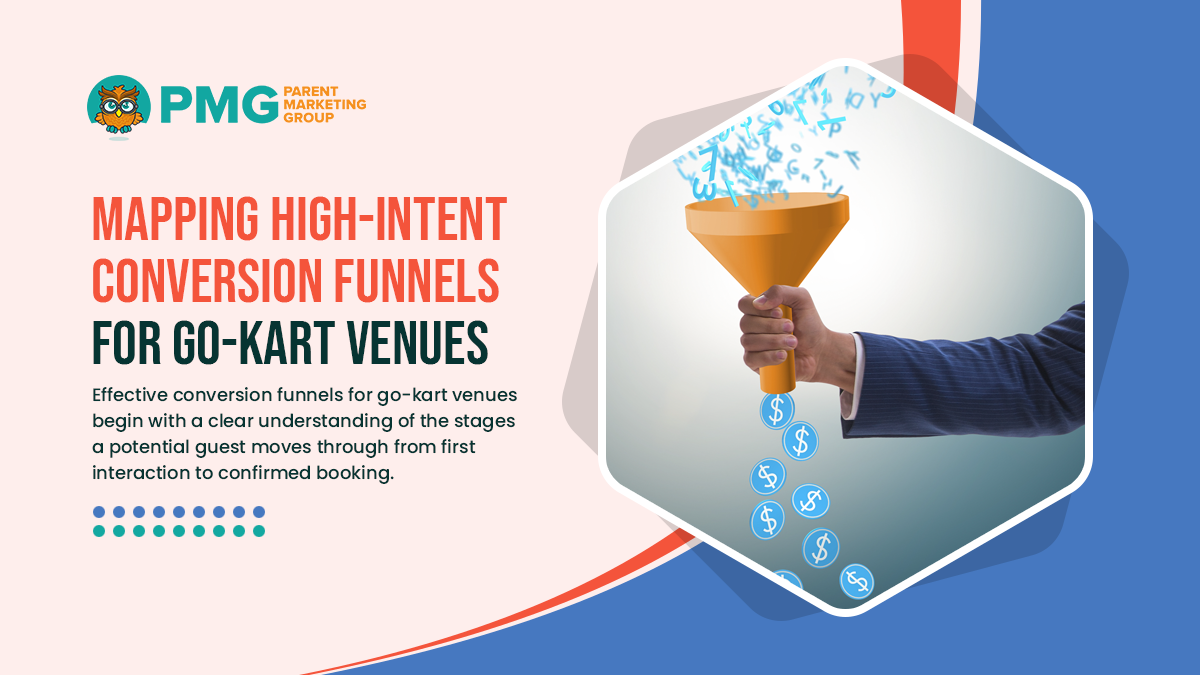
Effective conversion funnels for go-kart venues begin with a clear understanding of the stages a potential guest moves through from first interaction to confirmed booking. Rather than treating all website visitors the same, operators should identify and prioritize the behaviors that indicate genuine intent to visit, race, or host an event.
1. Awareness and Discovery
At the top of the funnel, visitors arrive from search, social, referrals, or paid campaigns. Key actions include:
- Viewing the homepage or “Racing Experience” page
- Reading about pricing or promotions
- Clicking on the location and hours information
2. Consideration and Evaluation
High intent begins to emerge as visitors explore specific offerings. Indicators include:
- Viewing birthday party or group event pages
- Comparing different race packages
- Checking availability or FAQ sections about safety and age limits
3. Booking and Lead Capture
This stage is critical for lead generation for go-kart tracks. Trackable actions include:
- Starting an online booking or reservation process
- Completing an event inquiry form
- Clicking to call or initiate a live chat during business hours
4. Confirmation and Post-Visit Engagement
Once a booking is made, the funnel does not end. Important behaviors include:
- Confirming a reservation via email or SMS
- Opening post-visit feedback or review requests
- Joining a loyalty program or subscriber list
By mapping each stage and attaching specific behavioral triggers, go-kart venues can assign different values to actions and build structured conversion funnels that reflect real intent. High-value behaviors, such as starting a booking or viewing event packages multiple times, should trigger stronger follow-up through paid remarketing, email nurturing, or sales outreach.
A clear, data-informed funnel model ensures marketing and operations teams focus on the behaviors that correlate most with revenue, rather than vanity metrics such as general traffic or page views.
Using Marketing Automation For Kart Tracks To Respond To Visitor Behavior
Using marketing automation for kart tracks enables operators to respond consistently and efficiently to visitors’ online actions. Instead of relying on manual follow-up or generic campaigns, automated workflows can deliver relevant messages at the right time, tailored to each prospect’s behavior.
1. Tracking Behavioral Data
Accurate tracking is essential before any automation can perform effectively. Key activities to monitor include:
- Visits to pricing, membership, or event pages
- Starts and completions of booking or inquiry forms
- Abandoned bookings at specific steps in the process
- Repeat visits within a short time frame
This behavioral data determines which workflow a prospect enters and what messages they receive.
2. Building Strategic Automation Workflows
Once tracking is in place, kart tracks can create workflows that respond to key actions. Examples include:
- An email sequence is triggered when a user abandons an event booking form
- A follow-up series for visitors who view corporate event pages but do not inquire
- Reminder messages for guests who start a membership application but do not complete payment
- Post visit workflows that request reviews, share race photos, or promote future races
Each workflow should have a clear objective, such as recovering abandoned bookings or converting event interest into formal inquiries.
3. Delivering Relevant, Timely Content
The effectiveness of marketing automation for kart tracks depends on the quality of the content delivered. Messages should:
- Acknowledge the specific action taken, such as viewing party packages
- Provide one clear next step, such as completing an inquiry form or calling the track
- Reinforce value drivers, including safety standards, group capacity, or special pricing
- Use time-bound incentives where appropriate, such as limited date availability
By combining accurate tracking, purposeful workflows, and clear messaging, kart tracks can ensure that every high-intent behavior receives a structured response. This approach supports stronger lead nurturing, higher booking rates, and more predictable revenue from digital channels.
Designing Email Follow-Up Systems For Event Bookings And Group Inquiries
Designing email follow-up systems for event bookings and group inquiries is essential for converting initial interest into confirmed reservations. Many potential customers research options, request information, and then become distracted. A structured follow-up process ensures that go-kart venues remain visible and relevant during this decision period.
1. Immediate Acknowledgment Sequence
Every event request or group inquiry should trigger an immediate confirmation email. This message should:
- Thank the prospect for the inquiry
- Confirm the details submitted, such as date preferences and group size
- Outline next steps and expected response time
- Provide a clear contact option for urgent questions
This establishes professionalism and reassurance that the request has been received.
2. Nurture and Decision Support Sequence
If the booking is not confirmed within a defined time frame, a nurture sequence should follow. These messages can:
- Highlight available packages and pricing in a clear format
- Address common questions around safety, age requirements, and capacity
- Share testimonials or brief case studies from successful past events
- Offer available times or dates that are popular for similar groups
Each email should focus on one primary action, such as replying to confirm details or clicking to schedule a call.
3. Deadline and Follow-Through Sequence
For event bookings tied to specific dates, a deadline-based sequence can create appropriate urgency. This may include:
- Reminders that preferred dates are filling
- Notifications of hold expirations on tentative reservations
- Final check-in messages confirming whether the group wishes to proceed or postpone
If the prospect decides not to book, the system can move them into a separate list for future promotions or seasonal offers.
Consistent email follow-up systems for event bookings and group inquiries reduce lost opportunities caused by delays, unanswered questions, or simple indecision. A clear framework ensures that every inquiry receives timely, relevant communication that supports the prospect through the decision process and encourages completion of the booking.
Identifying Behavioral Triggers On Key Website And Landing Pages
Identifying behavioral triggers on key websites and landing pages is central to effective lead generation for go-kart tracks. Behavioral triggers are specific actions that indicate a higher level of interest and can be used to initiate automated follow-up or remarketing.
Start by mapping which pages are most closely connected to revenue. Typical high-value pages include:
- Birthday party and group event package pages
- Corporate and team-building information pages
- Membership or loyalty program pages
- Online booking, pricing, and promotions pages
Within these pages, define the actions that signal intent, for example:
- Time spent on the page above a defined threshold
- Clicking to view pricing tables or detailed package descriptions
- Starting, but not completing, a booking or inquiry form
- Downloading a brochure, party guide, or event planning checklist
These actions can be configured as events in analytics and marketing platforms. Each event can then be used as a behavioral trigger that adds the visitor to a specific audience or automation workflow.
It is also important to distinguish between low-intent and high-intent behaviors. Viewing a blog post or gallery may indicate casual interest, while returning to the event page twice in one week suggests a stronger buying signal. Assigning different weights to these actions helps prioritize which leads should receive more intensive follow-up, such as personalized emails or sales outreach.
Regularly review event data to identify additional patterns. For instance, a high percentage of users might abandon the process at a particular step in the booking form. That behavior can trigger a targeted reminder email or a remarketing ad that offers assistance or a simple way to resume the process.
By clearly defining and tracking behavioral triggers across key website and landing pages, go-kart venues create a structured foundation for timely, relevant engagement. This approach supports higher conversion rates and more predictable performance from digital lead generation.
Conclusion
Behavioral triggers provide a practical, data-grounded framework for improving lead generation for go-kart tracks. By mapping conversion funnels, tracking high-intent actions, and connecting those behaviors to structured automation, operators can move beyond generic campaigns and focus on prospects who are most likely to book. Each interaction, from viewing event packages to starting a booking form, becomes a measurable signal that can guide timely and relevant follow-up.
To explore a behavioral trigger strategy tailored to your go-kart track, contact Parent Marketing Group at (716) 303-4133
or visit https://parentmarketing.com/contact-us.