SEO for mini golf courses is essential for attracting local families, tourists, and group organizers who begin their search on Google. When a course appears near the top of local search results, it is more likely to receive clicks, calls, and online bookings from nearby customers.
Effective SEO for mini golf courses involves optimizing location-based keywords, improving on-page content, strengthening local listings, and earning relevant links from community partners and tourism sites. With a clear, consistent strategy, mini golf operators can increase visibility, stand out from competitors, and convert online searches into regular visits and group reservations.
1. Improving Google Rankings For Mini Golf Venues With Targeted Keywords
Improving Google rankings for mini golf venues starts with a clear keyword strategy that reflects how local guests actually search for activities. The objective is to align your content with the specific search phrases used by families, tourists, and group organizers when planning outings or events.
Begin with structured keyword research that focuses on three core categories:
1. Primary Service Keywords
These describe the core attraction and should appear on key pages. Examples include:
- “mini golf course [city]”
- “mini golf near me”
- “family mini golf [region]”
These phrases typically map to the homepage and main experience pages.
2. Occasion and Intent-Based Keywords
These target visitors are looking for mini golf in the context of a specific event or outing. Examples include:
- “birthday party mini golf [city]”
- “group mini golf events”
- “date night mini golf”
These work well on party, group, and package pages, where the offer matches the searcher’s intent.
3. Supporting Local and Informational Keywords
These reinforce relevance to your local area and provide helpful information. Examples include:
- “things to do with kids in [city]”
- “outdoor activities for families [region]”
- “evening activities near [landmark]”
These can be incorporated into blog posts, FAQs, and local landing pages.
Once keywords are selected, incorporate them naturally into:
- Page titles and meta descriptions
- H1 and H2 headings
- Descriptive body copy and image alt text
- Internal links between related pages
Regularly review performance using tools such as Google Search Console to identify which queries already bring traffic and where there are gaps. Adjust titles, headings, and on-page content based on real search data. Over time, consistent use of targeted, relevant keywords will improve Google rankings for mini golf venues and attract more qualified local visitors.
2. Strengthening Local SEO For Family Entertainment Destinations
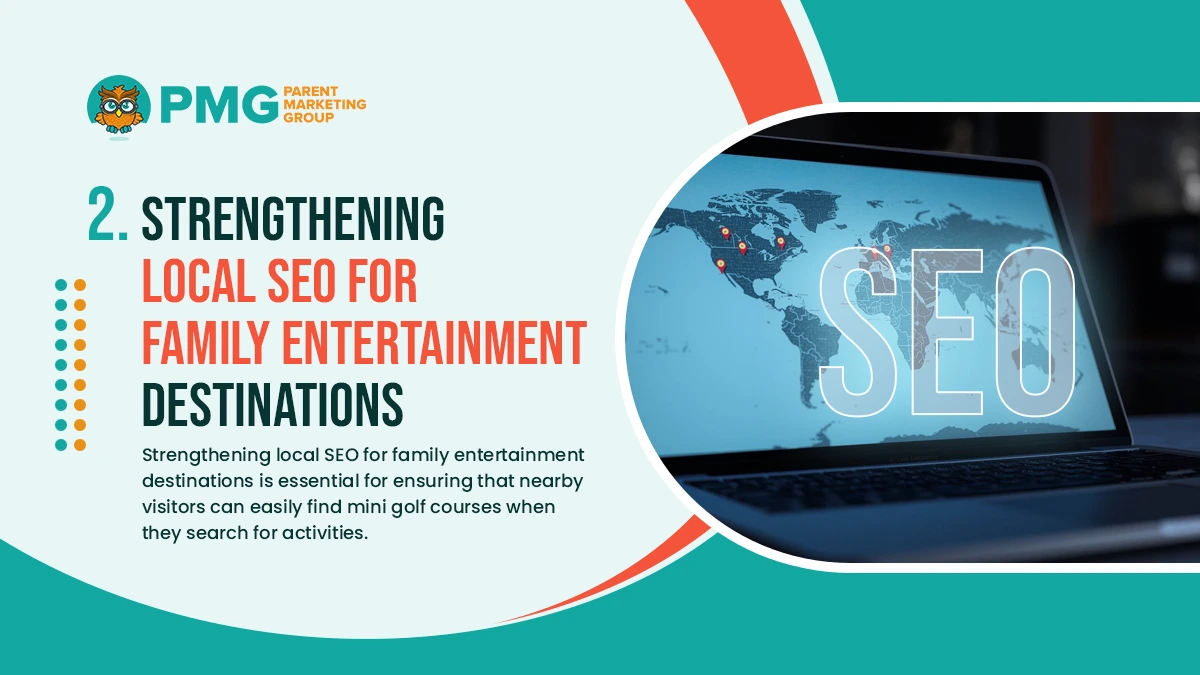
Strengthening local SEO for family entertainment destinations is essential for ensuring that nearby visitors can easily find mini golf courses when they search for activities. Local visibility depends on accurate business information, strong map presence, and consistent signals across key platforms.
A focused local SEO for mini golf courses strategy should cover three main areas.
1. Optimizing Google Business Profiles
Your Google Business Profile is often the first interaction potential guests have with your course. Key actions include:
- Verifying and completing all business details, including address, phone number, website, and hours
- Selecting accurate categories such as “Miniature Golf Course” and relevant secondary categories
- Adding high-quality photos of the course, parties, and night lighting, where applicable
- Publishing regular updates that highlight seasonal events, group offers, and special hours
A fully optimized profile improves visibility in local map packs and supports higher click-through rates.
2. Ensuring Consistent Local Citations
Search engines rely on consistent business information across the web. Mini golf operators should:
- Audit listings on major directories, tourism sites, and local business portals
- Ensure that the name, address, and phone number are identical everywhere
- Update old or duplicate listings that contain outdated information
Consistent citations strengthen trust signals and support higher local rankings.
3. Aligning On-Site Content With Local Search Intent
On the website, SEO for mini golf courses should reinforce geographic relevance and a family-focused approach. Effective actions include:
- Mentioning city, neighborhood, and nearby landmarks in headings and body copy where appropriate
- Creating location-focused pages or sections for tourists, local families, and group organizers
- Adding structured data (schema) for local businesses to help search engines interpret address and contact details
When these elements are implemented in a coordinated manner, mini golf courses strengthen their presence in local search results, attract more qualified nearby visitors, and support sustainable growth in bookings and walk-in traffic.
3. Website Optimization For Mini Golf Businesses To Convert Visitors

Effective website optimization for mini golf businesses focuses on turning interested visitors into bookings, inquiries, and walk-in traffic. The site should guide users clearly from initial interest to a defined action.
Ensure that key pages are easy to reach from the main navigation, including:
- Mini golf experience overview
- Pricing and specials
- Birthday parties and group events
- Location, hours, and contact details
- Online booking or inquiry page
On each page, present essential information such as pricing, age requirements, and booking options near the top. Use clear headings, short paragraphs, and concise bullet points to make content easy to scan. Prominent call-to-action buttons like “Book Now,” “Check Availability,” or “Request Party Info” should be visible on both desktop and mobile.
Technical performance directly impacts conversions. Mini golf operators should improve page speed, ensure full mobile responsiveness, and maintain secure HTTPS across the site. Forms for bookings or event inquiries should request only necessary details and provide a clear confirmation message after submission.
By combining simple navigation, strong calls to action, fast load times, and relevant information, website optimization for mini golf businesses increases the likelihood that visitors will complete a booking or contact the course.
4. Building High-Quality Local Links And Community Partnerships
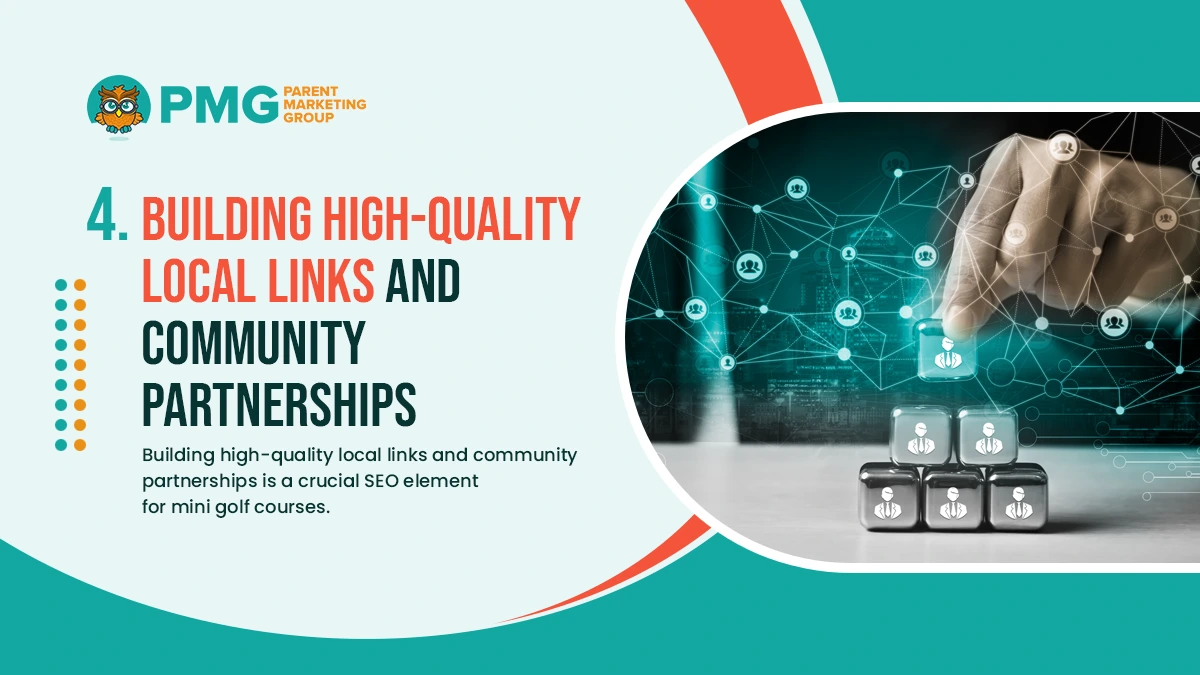
Building high-quality local links and community partnerships is a crucial SEO element for mini golf courses. Local backlinks signal to engines that your course is relevant, trusted, and connected to the surrounding community.
Begin by identifying organizations that already reach your ideal audience. These may include:
- Local tourism boards and visitor bureaus
- Hotels, campgrounds, and vacation rentals
- Schools, youth groups, and sports leagues
- Nearby restaurants, ice cream shops, and family attractions
Offer simple, mutually beneficial collaborations such as discount packages, cross-promotions, or fundraiser nights. When these partners list your mini golf course on their websites with a link to your site, they strengthen your backlink profile and can send referral traffic.
Participating in various events and sponsoring local teams or causes can also lead to online mentions and links from news sites, blogs, and community calendars. Request that your course be included with a clickable website link whenever you provide prizes, host events, or support local initiatives.
In addition, create useful content that local partners are happy to reference, such as family activity guides or event planning checklists. Over time, a consistent focus on local relationships produces a natural network of high-quality links that supports stronger search visibility and brand recognition.
5. Managing Online Reviews, Citations, And Google Business Profiles

Managing online reviews, citations, and Google Business Profiles is a critical component of SEO for mini golf courses. These elements influence local visibility, click-through rates, and the trust that families place in your course.
Begin with a structured review strategy. Encourage satisfied guests to leave feedback on Google, Facebook, and major travel or activity platforms. This can be supported by:
- Post-visit emails requesting a review
- On-site signage with QR codes
- Simple instructions on receipts or booking confirmations
Respond to all reviews in a professional manner. Thank guests for positive feedback and address concerns raised in negative reviews with specific, solution-focused replies. Consistent engagement shows that the business values guest experience and improves credibility.
Citations also require attention. Conduct regular audits of listings on major directories, maps, and tourism websites. Ensure that your name, address, phone number, and website are consistent across all platforms. Correct duplicate or outdated entries that may confuse both users and search engines.
Finally, maintain the accuracy of your Google Business Profile. Update hours for seasonal changes, add new photos, and publish short posts to highlight events and offers. Together, well-managed reviews, citations, and profiles help mini golf courses rank higher locally and convert more searchers into visitors.
Conclusion
A structured SEO approach for mini golf courses helps ensure that local families, tourists, and group organizers can find your course at the exact moment they are searching for activities. By focusing on targeted keywords, local search optimization, and a user-friendly website, mini golf operators can improve visibility in organic search results and convert more visitors into bookings and walk-in guests.
Consistent attention to Google Business Profiles, citations, and local links reinforces the course’s presence in the community and strengthens search engine trust. When combined with a disciplined review strategy and active reputation management, these elements elevate rankings and build long-term brand credibility.
If you would like expert support in creating and executing an SEO strategy for your mini golf course, contact Parent Marketing Group at Call (716) 303-4133; or visit https://parentmarketing.com/contact-us.