An effective weekday traffic strategy for indoor play centers helps turn slower days into steady booking opportunities. Many indoor play centers see strong weekend demand, but weekdays can leave open play sessions, party rooms, and group opportunities underused. With the right approach, those quieter days can be supported through targeted offers, local partnerships, parent-focused messaging, and consistent follow-up.
Instead of treating weekday traffic as unpredictable, play centers can build a repeatable system that encourages families, caregivers, homeschool groups, and local organizations to visit during off-peak times. This creates more consistent attendance and helps strengthen revenue throughout the week.
How Weekday Bookings for Indoor Playgrounds Create More Consistent Revenue
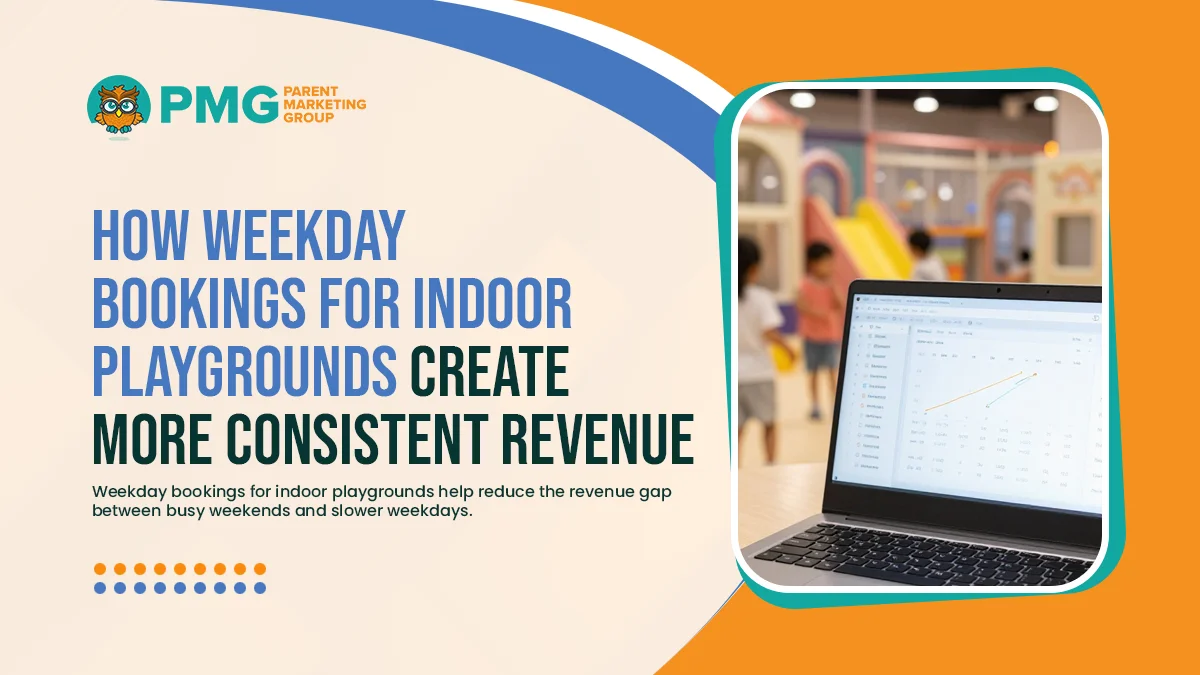
Weekday bookings for indoor playgrounds help reduce the revenue gap between busy weekends and slower weekdays. Many play centers depend heavily on Saturday and Sunday traffic, but this can create an uneven business model. When weekdays are supported with intentional campaigns, offers, and booking systems, the center has more opportunities to increase attendance, use available space, and create steadier weekly revenue.
Weekday Traffic Makes Better Use of Open Capacity
During the week, indoor play centers often have available time slots, party rooms, staff coverage, and play areas that are not being used to their full potential. Encouraging more weekday visits helps turn that unused capacity into income without requiring major operational changes.
This can include:
- Morning play sessions for toddlers
- After-school visits for families
- Small weekday birthday celebrations
- Homeschool group outings
- Parent meetups and caregiver groups
Each of these bookings helps fill time that may otherwise remain quiet.
Consistent Attendance Supports Better Planning
When weekday bookings become more predictable, the business can plan staffing, promotions, inventory, and events with greater confidence. This helps reduce the pressure of relying mostly on weekend crowds and makes weekly revenue easier to manage.
Weekday Offers Can Attract Specific Audiences
Not every customer needs a weekend visit. Some families, caregivers, and groups prefer quieter times with more space and flexibility. Weekday offers can speak directly to these audiences by highlighting benefits such as smaller crowds, flexible schedules, special pricing, or themed play sessions.
More Balanced Revenue Strengthens Long-Term Growth
A strong weekday booking strategy does more than fill a few empty hours. It creates a more balanced revenue model for the entire business. When indoor playgrounds increase weekday attendance, they can improve cash flow, build stronger customer habits, and create more repeat visits throughout the week.
How to Fill Empty Weekday Slots at a Play Center With Better Offers
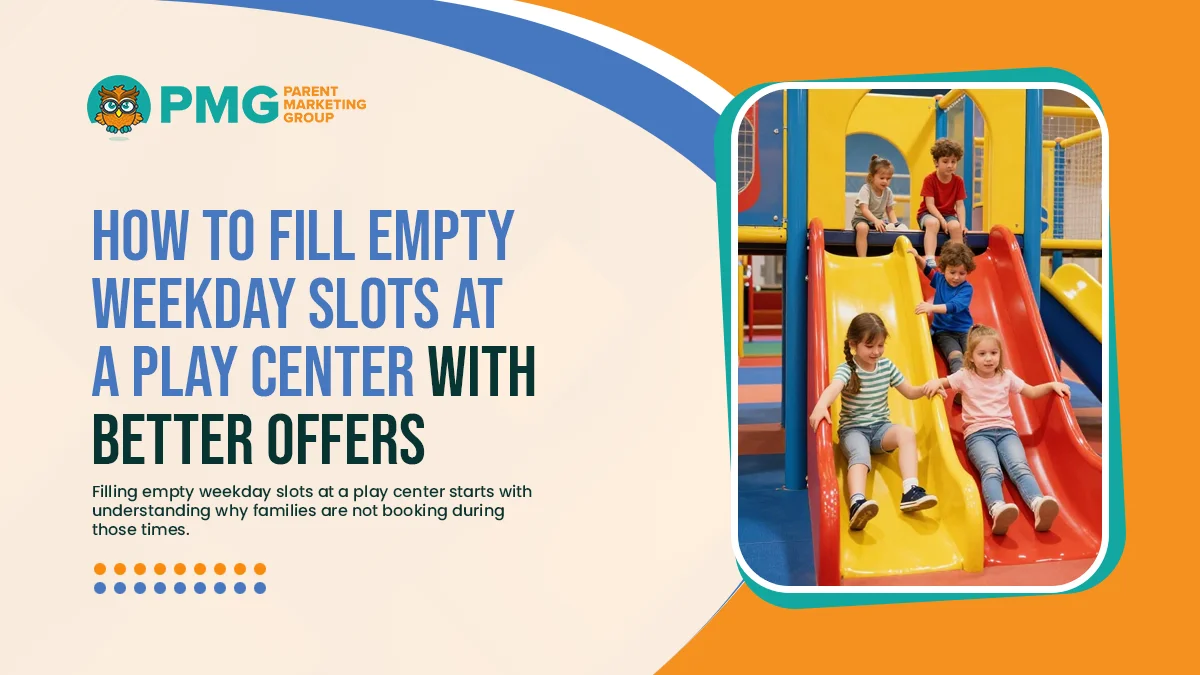
Filling empty weekday slots at a play center starts with understanding why families are not booking during those times. In many cases, parents are interested, but the offer does not feel urgent, specific, or valuable enough to change their schedule. A stronger weekday offer gives families a clear reason to visit when the center has more availability.
Make the Offer Match the Weekday Audience
Weekday visitors are often different from weekend visitors. Instead of promoting the same message every day, play centers can create offers for the people most likely to be available during the week.
These may include:
- Toddler mornings for parents and caregivers
- After-school play passes for local families
- Homeschool group sessions
- Weekday birthday party discounts
- Parent meetup specials
- Small group play packages
Each offer should address a real need, such as a quieter play environment, flexible scheduling, affordable activity options, or a reliable place for children to burn energy.
Add Value Without Reducing Profit Too Much
Better offers do not always require heavy discounts. A play center can add value in ways that feel meaningful to families while still protecting revenue. This may include extended play time, a snack bundle, a sibling add-on, loyalty points, or a discounted return visit.
Create Urgency Around Available Times
Weekday slots can be easier to fill when families know availability is limited or tied to a specific window. For example, a “Tuesday Toddler Play Session” or “Thursday After-School Special” feels more intentional than a general weekday discount.
Keep the Booking Step Simple
A strong offer only works if families can act on it quickly. The landing page, booking button, and follow-up message should clearly outline the next step. When the offer is easy to understand and easy to reserve, weekday slots are more likely to turn into steady bookings.
Why an Off-Peak Traffic Growth System Helps Stabilize Attendance
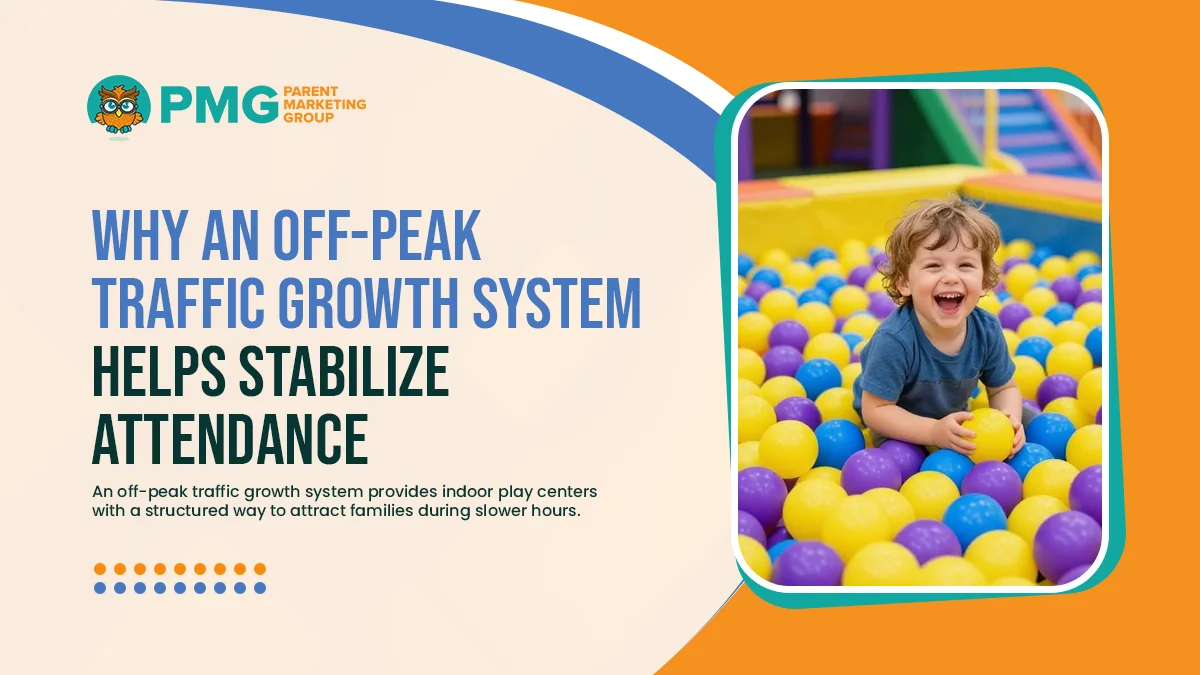
An off-peak traffic growth system provides indoor play centers with a structured way to attract families during slower hours. Instead of waiting for weekday attendance to improve on its own, the center can use planned offers, audience targeting, local outreach, and follow-up to create more predictable demand. This helps reduce the sharp difference between busy weekends and quieter weekdays.
It Turns Slow Periods Into Planned Opportunities
Off-peak times often have more available space, open staff capacity, and unused booking windows. A growth system helps identify which time slots need support and what type of promotion can best fill them. For example, a Tuesday morning may be ideal for toddlers, while a Thursday afternoon may work better for after-school visits.
It Creates Repeatable Campaigns
A single weekday promotion can help temporarily, but a system makes the effort more consistent. Play centers can build recurring campaigns around:
- Toddler play mornings
- Homeschool group sessions
- After-school play passes
- Weekday party packages
- Caregiver meetups
- Seasonal weekday events
When families begin to recognize these options, weekday visits can become part of their routine.
It Helps Marketing and Operations Work Together
A strong system connects promotion with real availability. Marketing should know which days, times, and spaces need more bookings, while operations should be ready to support the traffic campaign drive. This alignment helps prevent overpromising and improves the customer experience.
It Builds More Reliable Attendance Over Time
Stabilizing attendance is not only about filling one slow day. It is about creating a steady weekday demand pattern. With consistent offers, clear messaging, and regular performance tracking, indoor play centers can reduce revenue swings, improve facility usage, and create more dependable booking opportunities throughout the week.
Why Tracking Weekday Performance Helps Improve Future Campaigns
Tracking weekday performance helps indoor play centers understand which campaigns are creating real attendance, bookings, and revenue. Without clear data, it is easy to repeat offers that feel busy but yield weak results. A simple tracking system shows which days need support, which audiences respond best, and which promotions should be improved before the next campaign.
It Shows Which Offers Bring People In
Not every weekday offer performs the same way. Toddler mornings, after-school specials, homeschool sessions, and weekday party packages may each attract different levels of interest. Tracking helps identify which offers generate visits, inquiries, and repeat customers.
Useful metrics may include:
- Number of weekday bookings
- Walk-in traffic by day and time
- Party or group inquiries
- Offer redemptions
- Revenue per promotion
- Repeat visits after the first booking
It Helps Identify Slow Time Slots
A center may know that weekdays are slower, but tracking shows the specific gaps. Monday mornings may need a different strategy than Thursday afternoons. This makes future campaigns more focused and helps avoid promoting times that are already performing well.
It Connects Marketing Efforts to Revenue
Campaigns should be measured by more than impressions, clicks, or social engagement. The most important question is whether the campaign increased attendance or bookings. By connecting promotions to actual revenue, play centers can make smarter decisions about where to spend time and budget.
It Makes Each Campaign Stronger Over Time
Performance tracking provides the team with a clearer path to improvement. If an offer performs well, it can be repeated or expanded. If it underperforms, the message, audience, timing, or booking process can be adjusted. Over time, this creates a more reliable weekday traffic strategy that supports stronger attendance, better planning, and more consistent growth.
Conclusion
A strong weekday traffic strategy helps indoor play centers turn slower periods into reliable booking opportunities. By focusing on the right audiences, creating stronger weekday offers, building repeatable off-peak campaigns, and tracking performance, play centers can reduce the pressure of relying solely on weekends. Each improvement helps make weekday attendance more predictable and supports stronger revenue throughout the week.
The most effective approach is not built around one promotion. It is built around a clear system that connects marketing, booking, operations, and follow-up. When those pieces work together, indoor play centers can fill more open slots, serve families more consistently, and create long-term growth from days that were previously underused.
Ready to bring more families in during the week? Contact Parent Marketing Group at (716) 303-4133 or visit https://parentmarketing.com/contact-us.