Marketing ROI tracking for go-kart tracks is the foundation for making confident decisions about where to invest, what to pause, and how to grow revenue without wasting spend. When you can clearly connect leads, bookings, and party sales back to specific campaigns, your marketing becomes measurable and repeatable.
The most successful tracks do not rely on assumptions or isolated metrics. They monitor a few key data points that reveal what is driving demand, what is slowing conversions, and where profit is being left on the table. With the right tracking in place, you can improve performance while keeping reporting simple and actionable.
1. Cost Per Booking Go-Kart Marketing That Protects Profit
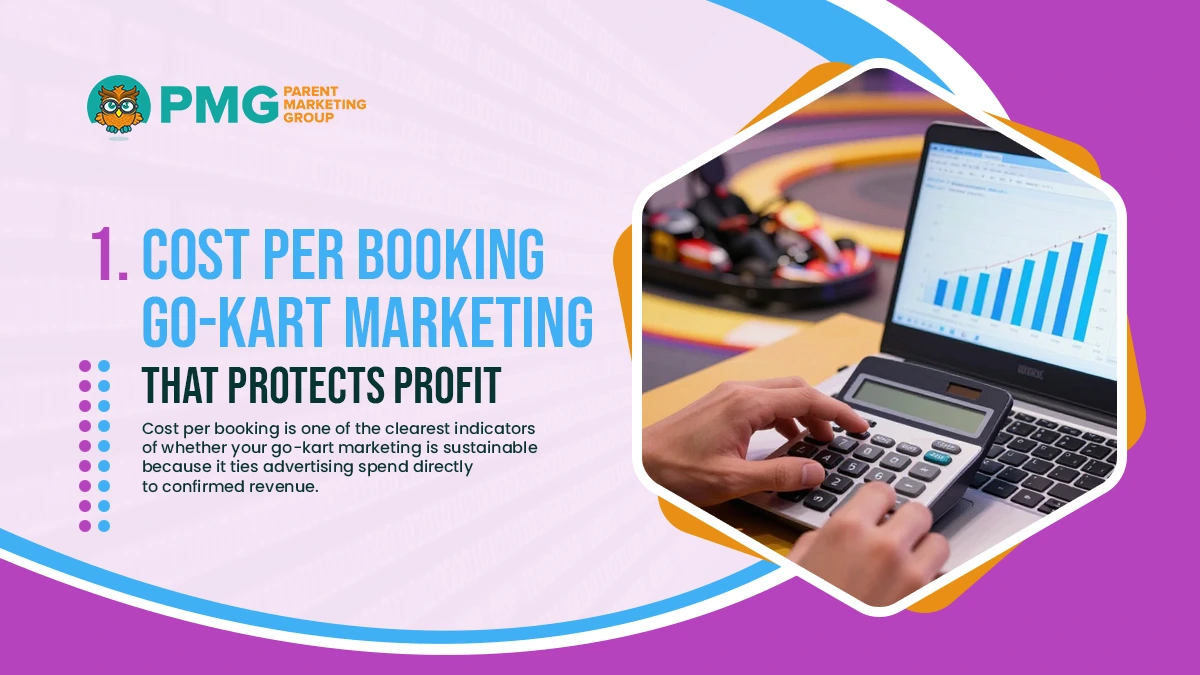
Cost per booking is one of the clearest indicators of whether your go-kart marketing is sustainable because it ties advertising spend directly to confirmed revenue. Start by defining what counts as a booking for your track, such as an online race reservation, a party deposit, or a qualified group event booking. Then use a consistent formula:
Cost Per Booking = Total Marketing Spend ÷ Total Confirmed Bookings
To keep the metric accurate, separate party bookings from single-racer bookings when profit differs, and avoid counting unqualified inquiries as wins. Next, segment the cost per booking by channel and offer type so blended averages do not hide underperforming campaigns.
Finally, pair the cost per booking with simple profit signals such as average booking value, add-on attachment rate, and cancellation rate. When these numbers are tracked together, you can scale the campaigns that drive profitable bookings and adjust the ones that drain margins.
2. Attribution Tracking Family Entertainment Can Trust Across Channels

Attribution tracking shows which marketing channels are actually driving bookings, not just clicks. For family entertainment centers, the goal is to connect every inquiry, call, and online reservation back to the source that started the journey.
Build A Simple Tracking System Your Team Can Follow
Start with consistent tracking across every touchpoint:
- Use UTM links on all digital ads and email campaigns
- Add QR codes on flyers, posters, and in-venue signage
- Use call tracking numbers on high-intent channels like search and retargeting
Then make sure your website forms and booking flow capture the source and medium, so leads do not appear as “unknown” in reporting. Support this with a single front desk question, such as how the guest found you, and log it in the same place each time.
Finally, compare platform-reported conversions with your booking or CRM data to measure confirmed revenue, not inflated dashboard results. When attribution stays consistent across channels, your budget decisions become clearer and more profitable.
3. Performance Metrics Kart Operators Can Use To Spot Winners Fast

Performance metrics matter most when they help you make decisions quickly. Instead of tracking everything, focus on a short set of numbers that reveal which campaigns are generating real demand and which ones are stalling before a booking happens.
Weekly Metrics That Keep Marketing Decisions Clear
Review these performance metrics that kart operators should monitor every week:
- Click-through rate (CTR) to confirm ad relevance and creative strength
- Cost per click (CPC) to spot rising competition or weak targeting
- Landing page conversion rate to measure how well your page turns traffic into bookings or inquiries
- Lead-to-booking conversion rate to verify lead quality, not just volume
When these metrics are tracked together, patterns become easier to see. A campaign with low CPC but weak lead-to-booking conversion is not a winner. A campaign with a higher CPC but strong booking volume and low cancellations is often. Consistent weekly reviews keep your marketing ROI tracking for go-kart tracks focused on performance that drives revenue.
4. Leads That Turn Into Real Bookings, Not Just Inquiries

Lead volume alone does not improve marketing ROI if those leads do not convert into reservations, parties, or group events. The most important step is to define what a qualified lead looks like for your track, then track how many leads meet that standard each week.
Measure Lead Quality With A Few Simple Ratios
Focus on metrics that connect inquiry volume to revenue:
- Qualified lead rate: qualified leads ÷ total leads
- Lead-to-booking rate: confirmed bookings ÷ total leads
- Speed to first response: time from inquiry to first contact
- Contact rate: leads reached ÷ total leads
If the qualified lead rate is low, tighten targeting and adjust ad messaging to match your ideal customers. If the lead-to-booking rate is low, review the timing of follow-ups, scripts, and booking friction on your website. When these benchmarks are monitored consistently, you can improve results without increasing spend.
5. Revenue Per Guest And Party Spend That Moves The Needle
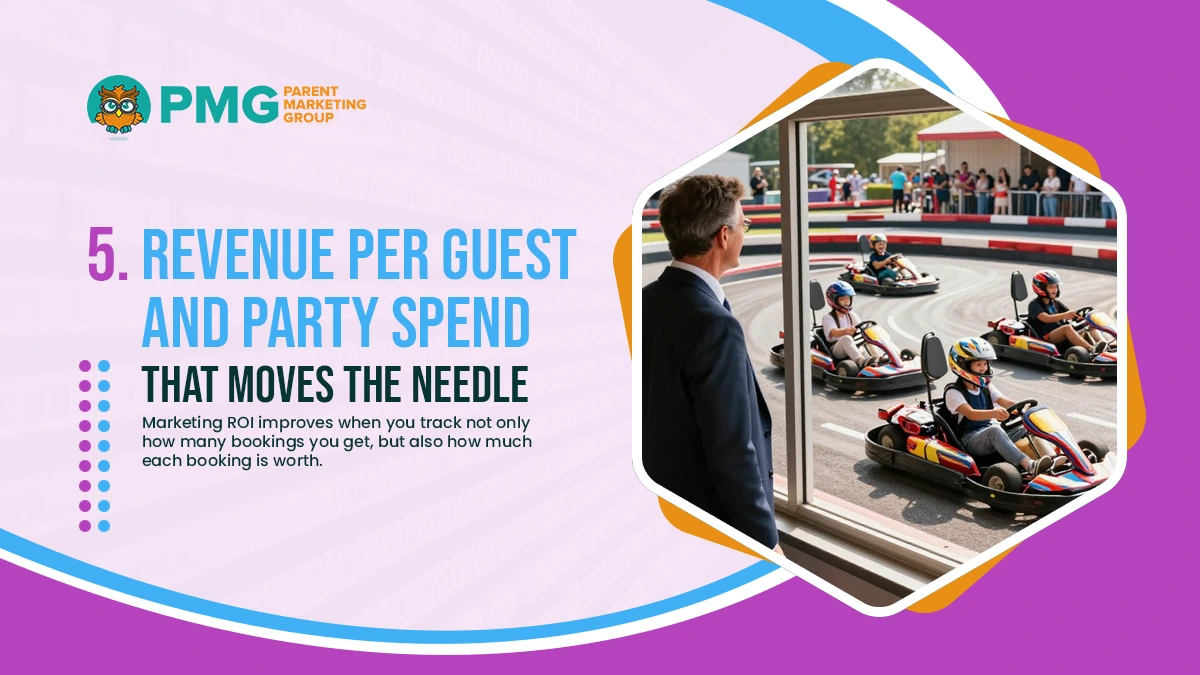
Marketing ROI improves when you track not only how many bookings you get, but also how much each booking is worth. Revenue per guest helps you understand the value of everyday visitors, while party spends reveals how well your packages and upgrades are performing. Together, these numbers show whether campaigns are attracting high-value customers or filling slots with low-margin traffic.
Track Spend By Visit Type, Not Just Total Sales
Use simple breakdowns that make decisions clearer:
- Revenue per guest: total daily revenue ÷ total guests served
- Average party value: total party revenue ÷ total parties booked
- Add-on rate: parties or bookings with upgrades ÷ total bookings
- Upgrade mix: which add-ons are purchased most often
If revenue per guest is flat, focus campaigns on higher-intent offers like bundled experiences, multi-race deals, or premium time slots. If party value is inconsistent, refine package tiers, add-ons, and booking prompts. When you track spend by visit type, you can improve profitability without relying on deeper discounts.
6. Repeat Visits And Membership Value That Compounds Over Time
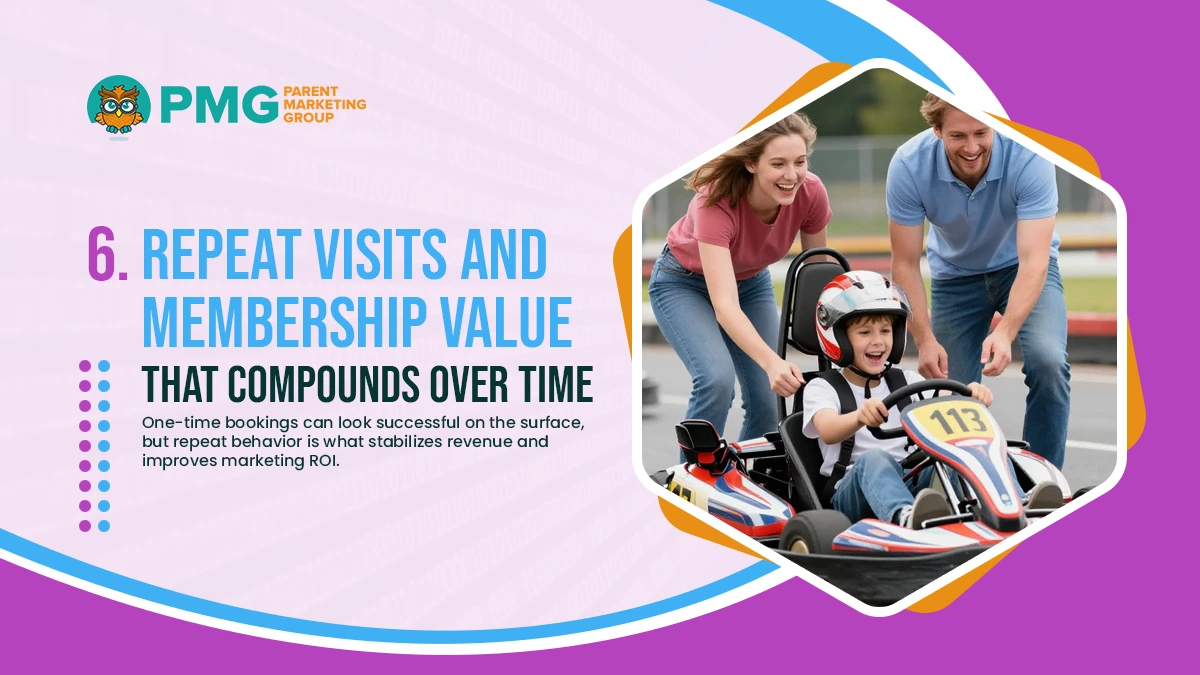
One-time bookings can look successful on the surface, but repeat behavior is what stabilizes revenue and improves marketing ROI. Tracking return visits and membership performance shows whether your marketing is attracting customers who stay engaged, not just deal seekers. It also helps you justify higher acquisition costs when long-term value is strong.
Measure Retention With Simple, Consistent Signals
Focus on a few metrics you can review monthly:
- Repeat visit rate: returning guests ÷ total guests
- Time to second visit: average days between first and second visit
- Membership conversion rate: memberships sold ÷ eligible guests or leads
- Membership retention: renewals ÷ memberships up for renewal
If the repeat visit rate is low, improve post-visit follow-up with email and SMS offers tied to track events, leagues, or birthday reminders. If membership retention is weak, review benefits, redemption ease, and front-desk promotions. When retention improves, every marketing dollar works harder.
7. Capacity And Peak-Time Utilization That Shapes True ROI
Marketing ROI is not only about generating demand. It is also about how well your track converts demand into revenue during the hours that matter most. Capacity and peak-time utilization show whether you are filling your most profitable time slots or creating congestion that reduces guest experience and limits repeat visits.
Track Utilization By Daypart And Booking Type
Review these metrics weekly or monthly:
- Peak utilization rate: sold race slots ÷ available race slots during peak hours
- Off-peak utilization rate: sold race slots ÷ available slots during slow periods
- Party slot fill rate: booked party blocks ÷ available party blocks
- Average wait time or throughput if you track queue performance
If peak utilization is high but revenue is not increasing, your pricing and package structure may need adjustment. If off-peak utilization is low, shift campaigns toward weekday parties, schools, and group incentives. When utilization is tracked by daypart, you can align marketing, staffing, and pricing to improve profitability.
Conclusion
When you track the right data points, improving marketing ROI becomes a practical process instead of a guessing game. Cost per booking, accurate attribution, and weekly performance metrics show what is driving demand. Lead quality, revenue per guest, and party value clarify whether you are attracting profitable customers. Retention and utilization reveal if your marketing is building long-term growth or only creating short-term spikes. With consistent reporting and a few clear benchmarks, go-kart operators can make faster decisions, protect margins, and scale the channels that produce reliable bookings.
Ready to tighten tracking and turn your marketing data into profit? Call (716) 303-4133 or visit https://parentmarketing.com/contact-us.