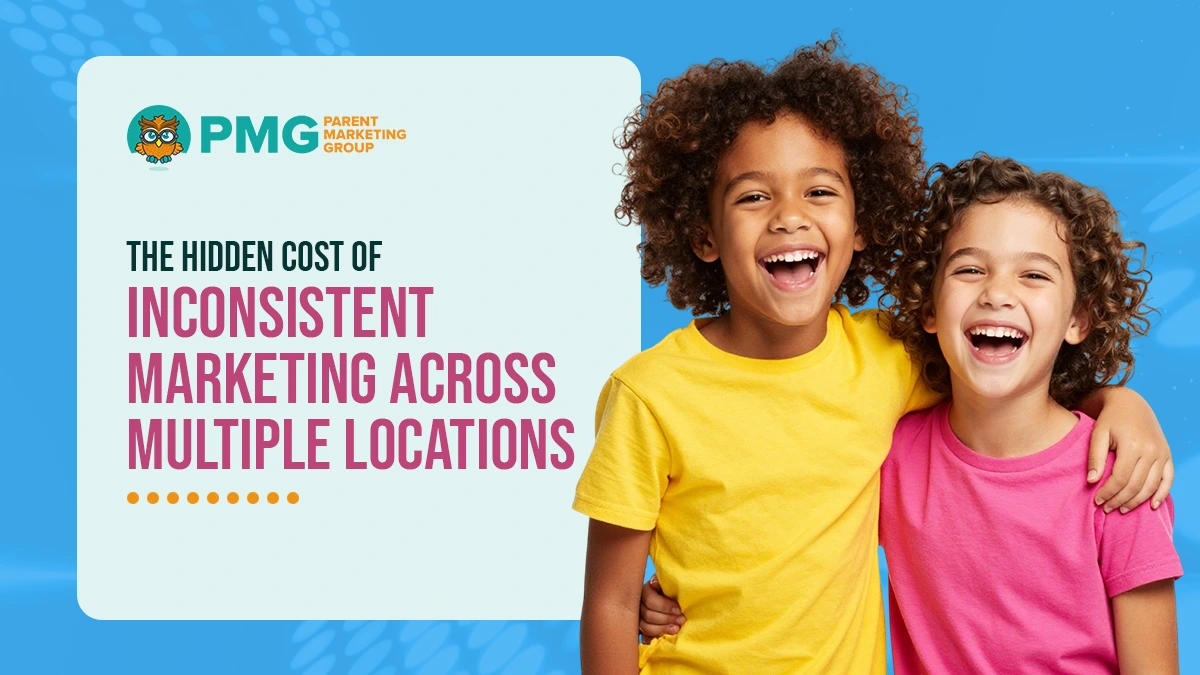
Multi-location marketing challenges for family entertainment often start small, then quietly turn into measurable revenue loss. When each location promotes different offers, uses inconsistent messaging, or follows different follow-up processes, families receive mixed signals and trust drops.
The result is more wasted ad spend, lower conversion rates, and uneven booking volume between locations. Inconsistent marketing also creates internal strain, forcing teams to reinvent assets, answer the same questions repeatedly, and manage confusion across channels. With clear standards and shared reporting, multi-location operators can protect brand credibility, improve performance, and create a repeatable system that supports every venue.
Brand Inconsistency For Revenue Loss Across Locations
Brand inconsistency leading to revenue loss is a real risk for multi-location family entertainment operators, as guests compare locations more than ever. When families see one set of offers on social media, a different message on the website, and conflicting details when they call or arrive, trust drops and hesitation increases. This creates a measurable chain reaction, from lower conversion rates to higher customer acquisition costs and weaker repeat visits.
Where Inconsistency Shows Up Most Often
In many multi-location environments, gaps appear in the same places:
- Different pricing or promotions are advertised across channels
- Mismatched branding, voice, and visuals between locations
- Separate landing pages with different calls to action and policies
- Uneven review responses and reputation management practices
- Inconsistent follow-up timing on leads, parties, and group inquiries
Even when each issue seems small, the combined effect is confusion and lost bookings.
How Mixed Messaging Impacts Conversion And Spend
Inconsistent marketing creates friction in the decision process. Families may delay booking because they are unsure what is included, which location is offering the deal, or whether the information is current. That hesitation often leads to:
- Higher bounce rates on key pages
- Lower form completion and booking rates
- More inbound calls that could have been avoided
- Increased discount pressure to “make up” for uncertainty
- Higher ad spend to achieve the same number of bookings
When conversion declines, the cost to acquire each customer rises, even if traffic stays the same.
Why The Revenue Loss Can Be Hard To See
The most damaging aspect of inconsistency is that it does not always manifest as a clear failure. It often appears as uneven performance between locations that should be comparable. You may see:
- One location consistently outperforms others on the same budget
- Campaigns that “work” in one market and fail in another without a clear reason
- Fluctuating party volume and unpredictable peak-time utilization
- Increased refunds, reschedules, and complaint volume tied to expectations
Without shared standards and reporting, these symptoms get treated as isolated problems.
What Consistency Actually Looks Like
A consistent brand protects revenue when each location follows the same foundation:
- Unified offer naming and promotion rules
- Shared landing page structure and calls to action
- Standard lead tracking and follow-up expectations
- Clear brand voice, visual guidelines, and approved assets
When families receive the same message everywhere, booking becomes easier, trust increases, and revenue becomes more predictable across every location.
Centralized Marketing Systems FECT Leaders Can Rely On
Centralized marketing is one of the fastest ways to improve performance across multiple venues by replacing guesswork with standards. For family entertainment centers, a strong system keeps each location aligned while still allowing room for local priorities, seasonal needs, and market differences. The goal is simple. Build one repeatable marketing engine that protects brand credibility, improves conversion, and makes reporting consistent across every location.
What To Centralize Versus What To Localize
Not everything needs to be identical, but the foundation should be shared.
Centralize:
- Brand voice, visual guidelines, and approved messaging
- Offer naming, promotion rules, and pricing guardrails
- Landing page templates and call-to-action standards
- Tracking setup, reporting dashboards, and attribution rules
- Review response guidelines and escalation processes
Localize:
- Event partnerships and community promotions
- Location-specific photos, team highlights, and facility details
- Market-based scheduling, capacity considerations, and availability
This balance maintains consistency without removing flexibility.
Core Tools That Make The System Work
Reliable centralized marketing systems typically include:
- A shared asset library for creative, copy, and promo templates
- A unified tracking structure using consistent UTMs and call tracking
- A standard lead capture and follow-up workflow across locations
- A single reporting view for bookings, cost per booking, and revenue
When these elements are shared, teams stop rebuilding the same materials and can focus on execution.
Operating Rhythms That Prevent Drift
Centralization succeeds when it is supported by routine. Practical rhythms include:
- Monthly promo planning with a shared calendar
- Weekly reporting reviews with location-level comparisons
- A simple approval process for new offers and creative updates
- Quarterly audits of pages, listings, and tracking accuracy
When systems and rhythms are in place, leaders gain clearer visibility, locations execute faster, and marketing becomes easier to scale.
Scaling Issues With Family Entertainment Chains That Hurt Performance
Scaling issues with family entertainment chains often appear when growth outpaces systems. Adding locations increases complexity across offers, staffing, technology, and guest expectations. If marketing operations do not scale at the same pace, performance becomes uneven. Some venues overbook and struggle to deliver, while others underfill peak periods and rely on discounting. The result is inconsistent revenue and a brand experience that feels unpredictable to families.
Where Scaling Breaks Marketing First
Growth typically exposes the same pressure points:
- Different booking tools, forms, or CRM workflows by location
- Location-specific promos launched without shared rules or timing
- Inconsistent lead response time due to staffing gaps
- Mixed online listings and outdated information across platforms
- Uneven creative quality and messaging from local teams
When these issues compound, reporting becomes unreliable and decision-making slows.
How It Impacts Revenue And Guest Experience
Performance declines when families encounter friction. Common outcomes include:
- Lower conversion rates because offers look inconsistent
- Higher cost per booking due to tracking gaps and wasted spend
- More inbound calls are caused by unclear details online
- Increased cancellations when expectations are not set correctly
- Lower repeat visits when the experience varies by location
Marketing cannot compensate for operational inconsistency. It can only amplify what is already happening.
How To Scale Without Losing Control
The most effective approach is to standardize the fundamentals and measure compliance. Focus on:
- One campaign framework with shared naming, rules, and assets
- One landing page template with consistent calls to action
- One lead tracking and follow-up process across locations
- One reporting dashboard that compares locations fairly
- Clear ownership for listings, reviews, and promo updates
When the basics are unified, chains can grow while maintaining predictable performance. Each new location becomes easier to launch, manage, and market profitably.
How Inconsistency Inflates Ad Spend And Lowers Conversion Rates
Inconsistent marketing increases ad costs by weakening the path from click to booking. When families see an offer in an ad but land on a page that looks different, reads differently, or contains conflicting details, hesitation rises. That hesitation shows up in the metrics that directly affect performance. Lower engagement, higher bounce rates, and fewer completed bookings force you to spend more to achieve the same result.
The Hidden Ways Spend Increases
Inconsistency drives up costs in several predictable ways:
- Lower click-through rates when ads do not match the brand families are recognized
- Higher cost per click as platforms respond to weaker engagement signals
- More wasted traffic when visitors leave quickly due to unclear or conflicting details
- Duplicate creative production when each location rebuilds ads, graphics, and landing pages
- Inefficient testing because results cannot be compared consistently across locations
Even small differences in messaging or structure can reduce efficiency when budgets scale.
Where Conversion Breaks Down
Families abandon bookings when information feels uncertain. Common friction points include:
- Different pricing or package details across channels
- Multiple offers competing on the same page
- Inconsistent calls to action, such as “Book Now” versus “Request Info”
- Varying policies on deposits, cancellations, or outside food
- Slow or inconsistent follow-up after form submission
When these elements are not standardized, conversion becomes less predictable.
Fix The Conversion Path With Shared Standards
The fastest way to reduce ad waste is to align the full journey. Practical steps include:
- Use one approved offer name and one set of rules per promotion
- Match ad copy to landing page headlines and visuals
- Standardize call-to-action language and button placement
- Use the same tracking structure so attribution is reliable
- Set a lead response expectation and measure it by location
When consistency improves, conversion rates rise. As conversion rates rise, the cost per booking falls, and ad spend begins to work harder across every location.
Conclusion
Inconsistent marketing across multiple locations creates costs that are easy to overlook because they appear as small inefficiencies rather than a single clear problem. Mixed messaging weakens trust, fragments reporting, and forces teams to spend more time and budget to achieve the same number of bookings. When brand standards, offers, and tracking are centralized, performance becomes easier to manage and easier to scale. Locations gain clearer guidance, families experience fewer surprises, and leadership gains reliable data to make confident decisions. Consistency is not a creative constraint. It is a revenue protection strategy that supports predictable growth across every venue.
Ready to align your locations with a system that improves conversion and reduces wasted spend? Call (716) 303-4133 or visit https://parentmarketing.com/contact-us.