How to increase weekday bookings for go-kart tracks is a question many venue owners face as they look to make better use of slower days and improve overall revenue. While weekends often bring steady traffic, weekday performance usually requires a more intentional strategy built around audience behavior, timing, and offer positioning.
Smarter marketing can help go-kart tracks attract families, groups, school breaks, corporate outings, and off-peak visitors with greater consistency. By focusing on the right promotions, channels, and customer data, operators can turn underperforming weekdays into valuable opportunities for stronger bookings and more predictable business growth.
Why Filling Slow Days at FECs Requires a More Targeted Strategy
Filling slow days at FECs requires more than broad promotion. Weekday demand differs from weekend traffic, so marketing efforts must be tailored to specific audience needs, schedules, and booking motivations. A general campaign may create awareness, but it rarely solves the real challenge of attracting guests during lower-demand time periods.
Weekday Audiences Have Different Intent
Families, schools, corporate groups, homeschool networks, camps, and community organizations all consider weekday visits for different reasons. Their availability, budget expectations, and decision-making timelines differ from those of weekend guests. A weekday strategy should account for who is most likely to book and what matters most to them.
For example, weekday demand may be influenced by:
- School calendars
- Corporate planning cycles
- Parent work schedules
- Weather-related indoor activity needs
- Local community event timing
Broad Messaging Often Misses the Opportunity
Many FECs promote weekday availability the same way they promote weekend fun. That approach can limit results because it does not speak to the practical value of booking during the week. Weekday visitors often need a stronger reason to act, whether that is convenience, pricing, group benefits, or a well-timed seasonal offer.
More targeted messaging can highlight benefits such as:
- Shorter wait times
- Easier group coordination
- Special weekday pricing
- Reserved event access
- Educational or team-building value
Strategy Improves Both Reach and Efficiency
A targeted approach helps marketing teams spend more effectively by aligning campaigns with the audiences most likely to convert. Instead of pushing one general message across every channel, teams can build focused campaigns for school outings, corporate events, youth groups, or family promotions based on local demand patterns.
This level of precision not only improves response rates but also supports stronger long-term planning. When FEC leaders understand who books weekdays and why, they can build more consistent demand, improve campaign performance, and turn slower days into a more dependable part of the revenue mix.
Using Corporate Team Building Marketing to Drive Weekday Group Bookings
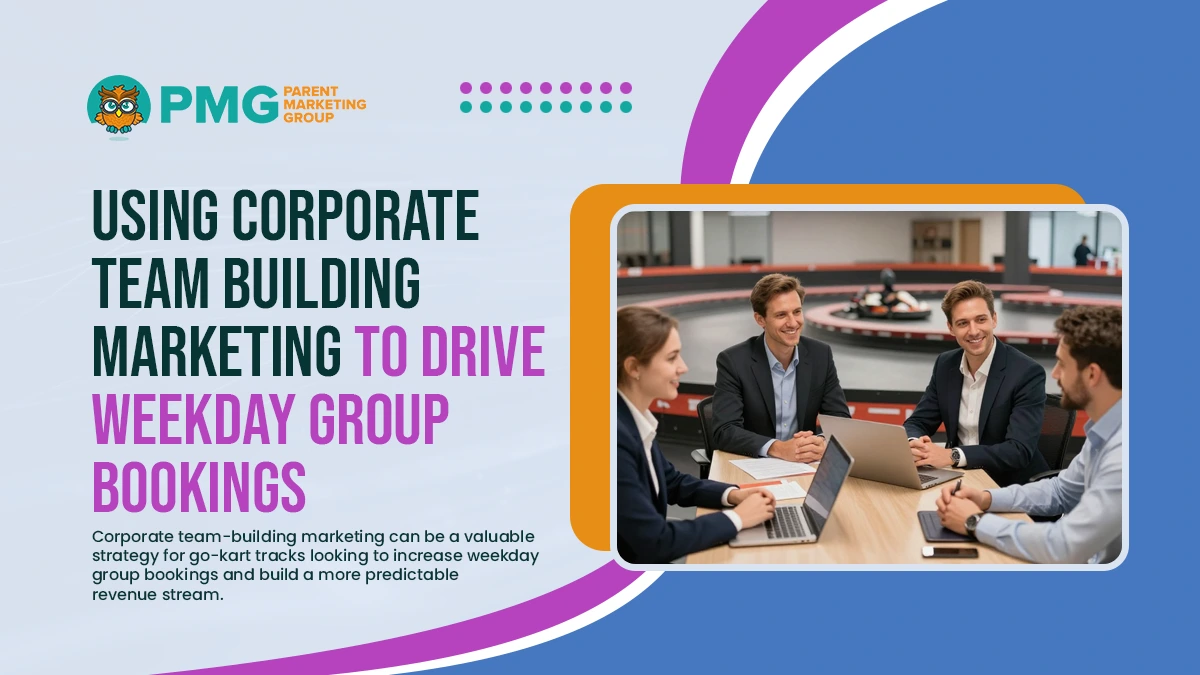
Corporate team-building marketing can be a valuable strategy for go-kart tracks looking to increase weekday group bookings and build a more predictable revenue stream. Businesses often seek off-site experiences that foster team connection, reward employees, and provide a break from routine. For go-kart venues, that creates an opportunity to position weekday bookings as organized, engaging group experiences rather than simple recreational visits.
Position the Experience for Business Needs
Corporate decision-makers are evaluating more than entertainment value. They want an outing that feels well-planned, easy to coordinate, and worthwhile for their team. Marketing should clearly communicate how the venue supports those goals.
Strong positioning often includes:
- Private or semi-private group options
- Streamlined scheduling and booking support
- Food, meeting, or package add-ons
- Experiences suitable for different team sizes
- A balance of fun, competition, and convenience
This helps the offer feel relevant to HR managers, office administrators, and business owners planning weekday events.
Build Messaging Around Practical Outcomes
Corporate audiences respond well to marketing that highlights a clear benefit. Rather than focusing only on speed or excitement, weekday campaigns should connect the experience to team morale, employee appreciation, or group engagement. This creates a stronger business case for booking.
Helpful themes may include:
- Midweek employee appreciation events
- Team celebrations after a company milestone
- Off-site bonding experiences
- Client entertainment opportunities
- Department outings during slower office periods
Make Booking Simple and Professional
A business audience expects a clear process. Landing pages, ads, and email campaigns should make it easy to request details, compare packages, and contact the venue. Simple booking forms, fast follow-up, and clear group pricing all help reduce friction and improve conversion.
When corporate team building marketing is supported by strong messaging and a smooth booking experience, weekday demand becomes easier to grow. Go-kart tracks can attract local companies, fill underused time slots, and expand beyond consumer traffic with a strategy that supports both guest experience and business goals.
Strengthening School Field Trip Lead Generation During Off-Peak Hours
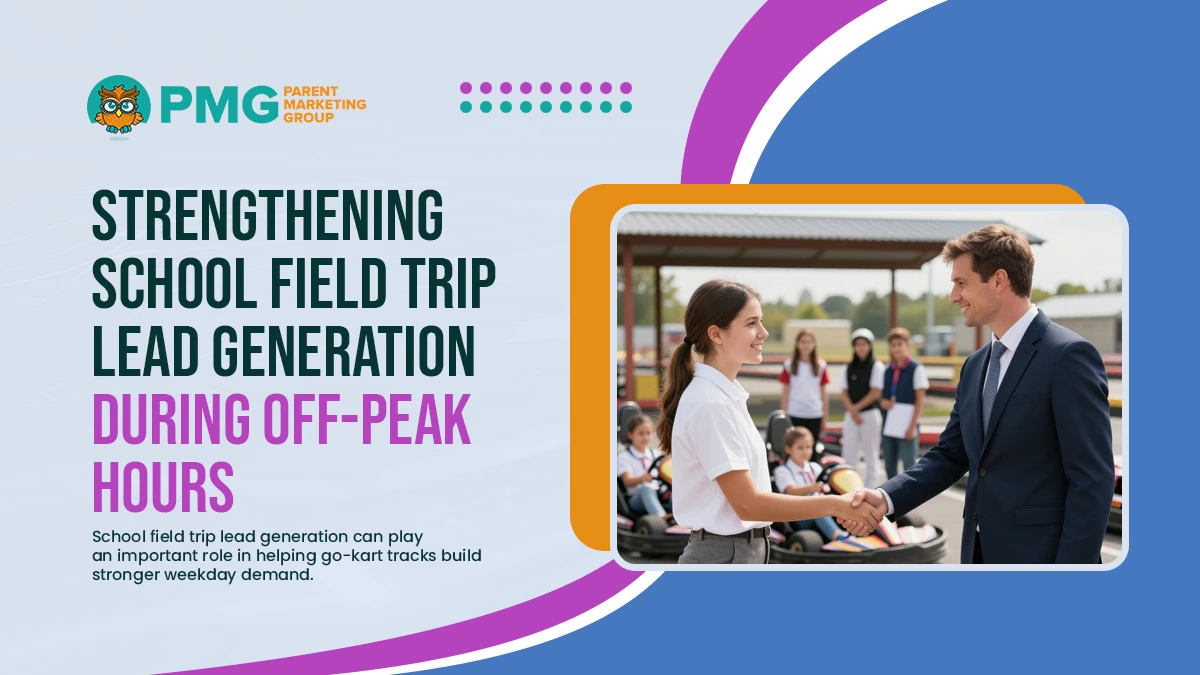
School field trip lead generation can play an important role in helping go-kart tracks build stronger weekday demand. Off-peak hours often align well with school schedules, allowing venues to attract organized group visits when general traffic is lighter. To do this well, marketing must present the experience in a way that feels structured, age-appropriate, and easy for schools to plan.
Position the Venue as a Group-Friendly Destination
Schools need more than a fun activity. They need a destination that feels safe, manageable, and worthwhile for students and staff. Marketing should clearly explain how the venue supports group visits and what educators can expect during the experience.
Important details to highlight may include:
- Group booking options
- Age or height requirements
- Safety procedures and supervision support
- Dedicated check-in or event coordination
- Food or add-on options for larger groups
This kind of information helps reduce uncertainty and makes outreach more effective.
Create Messaging That Supports School Priorities
School contacts are often balancing budgets, logistics, and student engagement. Promotional messaging should reflect those priorities rather than relying only on excitement or entertainment. A stronger message may focus on ease of planning, organized group experiences, and memorable outings that fit within the school day.
Helpful angles can include:
- Reward trips for student achievement
- End-of-semester celebrations
- Enrichment outings for clubs or student groups
- Special weekday group packages
Make Inquiry and Follow-Up Easy
A strong lead generation strategy depends on a simple path to action. Landing pages, email outreach, and paid campaigns should direct school contacts to a clear inquiry form with the information they need upfront. Quick follow-up matters, especially when staff are comparing multiple options.
For better results, venues should include:
- A dedicated school trips page
- Simple request forms
- Clear group pricing or package guidance
- Fast response times from the team
When school field trip lead generation is supported by clear messaging and an organized booking experience, go-kart tracks can turn off-peak hours into valuable weekday opportunities while building stronger relationships with local schools.
Building Local Campaigns Around Predictable Booking Windows
A stronger weekday strategy begins with timing. Go-kart tracks often see recurring patterns in when different audiences are most likely to book, and those patterns can shape more effective local campaigns. Rather than marketing weekday availability in a broad, constant way, operators can improve results by aligning promotions with predictable booking windows tied to local behavior, calendars, and planning habits.
Identify When Key Audiences Tend to Book
Different weekday segments make decisions on different timelines. Corporate groups may plan weeks, while parents looking for an activity during a school break may act much closer to the visit date. Schools, camps, youth groups, and community organizations also tend to follow recurring planning cycles throughout the year.
Useful booking windows may be influenced by:
- School holidays and early-release days
- Seasonal camp schedules
- Corporate planning periods
- Local business slow seasons
- Weather-driven demand for indoor activities
When these patterns are tracked consistently, campaigns become easier to schedule with purpose.
Match Promotions to the Right Planning Moment
The most effective campaigns reach people when they are actively considering options. A field trip promotion sent after schools have finalized plans may have a limited impact. A team event campaign launched just before companies begin quarterly planning may perform far better.
To improve local response, venues can align messaging with timing, such as:
- Early outreach for school and camp groups
- Mid-quarter promotions for business outings
- Last-minute family offers during breaks or weather shifts
- Community group promotions around local event calendars
Use Local Data to Refine Campaign Timing
Each market has its own rhythms, and local data should guide the campaign calendar. Booking histories, website traffic trends, past inquiry timing, and seasonal demand patterns can all reveal when audiences are most responsive. This helps teams spend more efficiently and avoid promoting the wrong offer at the wrong time.
When local campaigns are built around predictable booking windows, weekday marketing becomes more precise and more productive. Go-kart tracks can improve visibility, increase response rates, and build steadier weekday demand by reaching the right audiences with the right message at the right time.
Conclusion
Increasing weekday bookings for go-kart tracks requires a strategy that is both audience-specific and operationally practical. From corporate groups and school outings to local families and community organizations, weekday demand grows when marketing aligns with real booking behavior, offers clear value, and delivers timely outreach. Stronger results come from targeted campaigns, well-positioned offers, and a booking experience that removes friction for decision-makers. When go-kart operators use data to guide timing, messaging, and promotion strategy, slower weekdays can become a more dependable source of traffic, group reservations, and long-term revenue growth.
Ready to strengthen weekday demand with a smarter marketing plan? Connect with Parent Marketing Group at (716) 303-4133 or visit https://parentmarketing.com/contact-us.